

How can artificial intelligence help make processes and ESG reporting more efficient and sustainable—especially in times of labor shortages, increasing demands, and growing cost pressures? This question was the focus of the webinar “AI in Office & Administration: AI for Sustainability and Efficiency”, which was hosted by AIR Artificial Intelligence Regensburg on May 6, 2025.
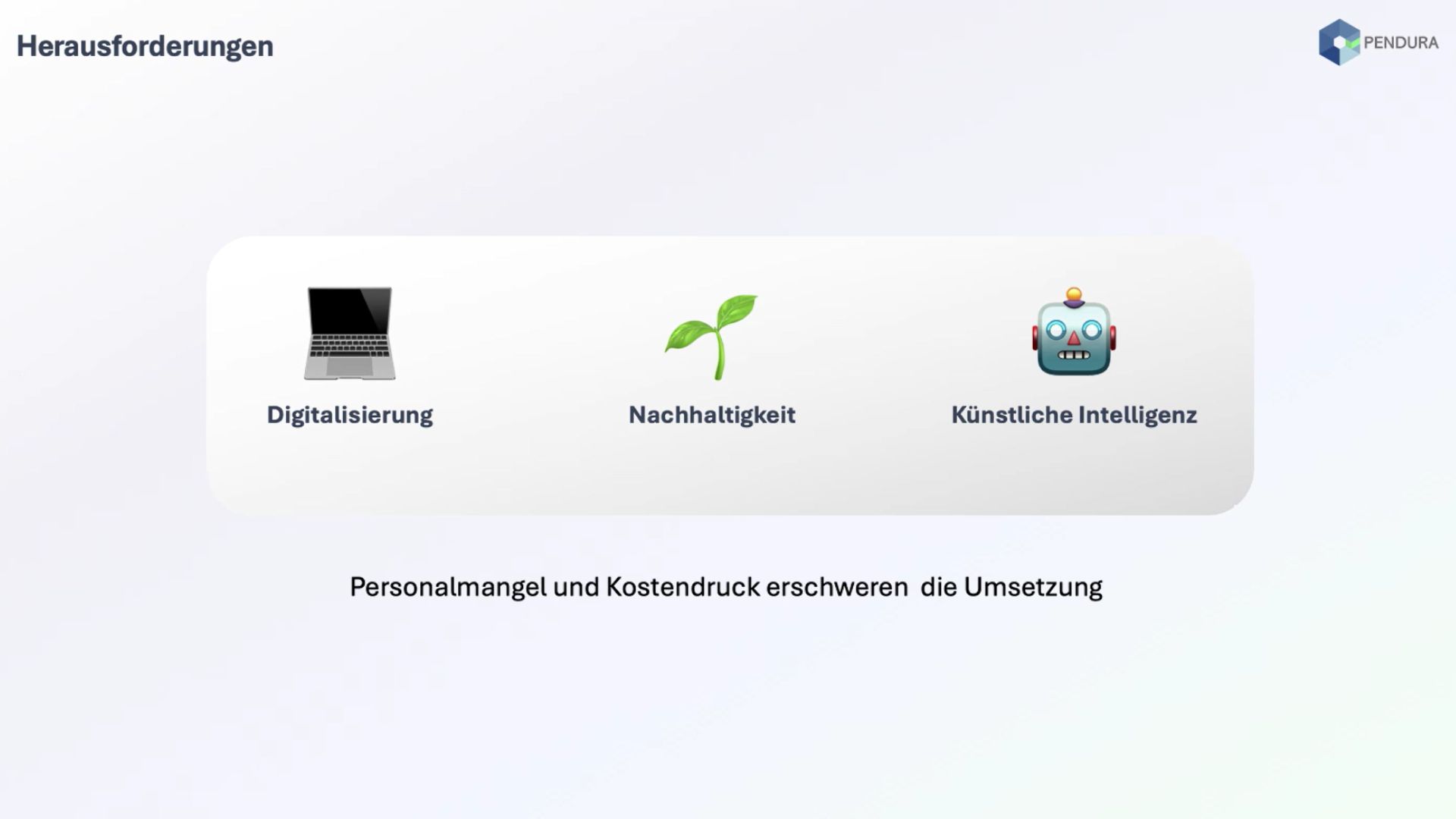
Quirin Schneider from Pendura, a TechBase startup and member of the AIR Cluster, kicked off the event. The focus of his practical presentation: How can AI be used to develop resource-efficient solutions that offer real added value? Digitalization, sustainability, and artificial intelligence were viewed both as challenges—complicated by staff shortages and cost pressures—and as opportunities created by synergies. Following an introduction to the sensible use of AI tools in everyday work, best practices were presented—such as automated data maintenance with suppliers or the use of drafting aids—examples that can already lead to tangible efficiency gains and cost savings with manageable effort. The overarching message: Even small, cleverly implemented AI solutions make a difference.
The second part focused on the “Twin Transformation”: AI and ESG—that is, environmental, social, and governance—reporting requirements. Dr. Christian Maier and Dr. Tassilo Föhr of Rödl & Partner answered the following questions: What does ESG mean in concrete terms? What are the challenges in implementing it? And how can AI help with this? The company’s proprietary AI Hub was also presented—a platform that processes regulatory content in a targeted manner and makes it usable for reporting.
Prof. Dr. Stephan Scheele, Professor of Theoretical Computer Science and Artificial Intelligence at OTH Regensburg, followed up with insights into the joint research project “Data Tales,” in which AIR member dab: Daten-Analysen & Beratung GmbH is also participating. The goal of the three-year project is to use a hybrid AI approach to generate interactive data stories—that is, easy-to-understand, data-driven narratives that convey complex issues transparently and thus enable effective sustainability communication. Technologically, the project utilizes, among other things, an AI copilot and expert bots with Retrieval-Augmented Generation (RAG) to support knowledge management. At the same time, Explainable AI (XAI) ensures the necessary traceability of the results. A demonstrator for process mining was also showcased—a tool that visualizes process flows and presents them in an understandable way. This once again highlighted how crucial transparency and explainability are for the acceptance of AI systems.