

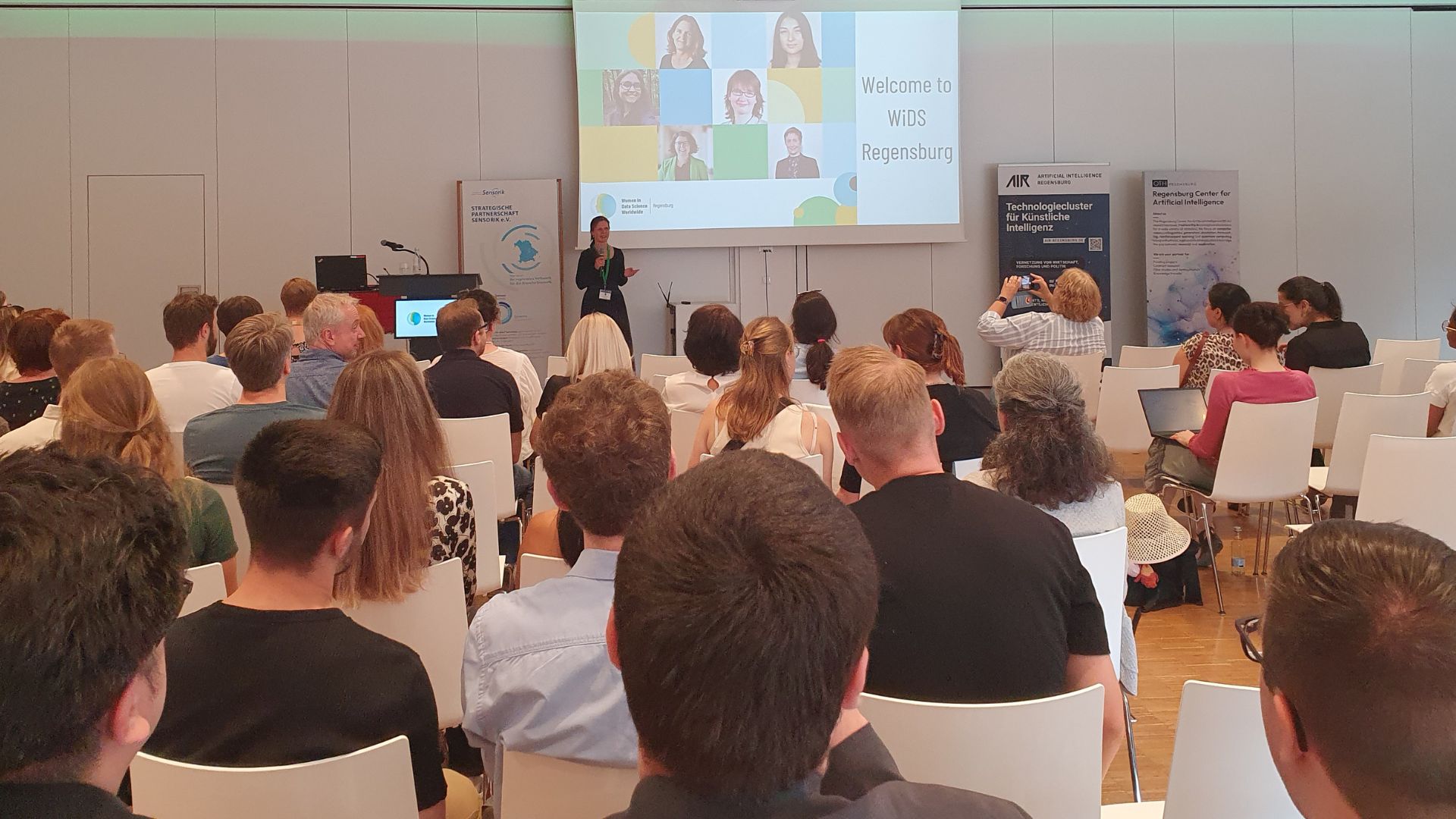
Drone-based traffic monitoring, thermal Earth observation via satellite constellations, causal analysis of heat waves, language models with structural fairness issues—the program for the sixth “Women in Data Science Regensburg” (WiDS Regensburg) conference at the Jahnstadion on June 18 demonstrated that: Data science is no longer limited to academia but addresses the most pressing social and economic issues of our time. With around 160 participants, the conference was once again fully booked this year. Numerous regional companies supported WiDS Regensburg.
What began in 2021 as a regional offshoot of a Stanford initiative is now a fixture on the data science community’s calendar in the region. WiDS Regensburg has established itself as a platform that brings together methodological depth and industrial application—and in doing so, has positioned Regensburg as a major hub for data science.
Six female scientists from academia and industry addressed a range of topics this year that reflect the breadth of modern data science. The morning was devoted to climate and transportation. In climate research, traditional correlation analyses are insufficient for understanding the mechanisms behind heat waves: causal discovery and causal effect estimation methods applied to land-atmosphere feedbacks reveal the actual causal chains—a prerequisite for reliable climate models. Sensor-equipped bicycles, drone-based traffic monitoring, and smartphone GPS data provide heterogeneous data streams from which machine learning methods derive driving behavior, safety risks, and infrastructure needs—the foundation for data-driven mobility policy. The Munich-based company OroraTech has long been internationally renowned for its thermal digital twin of the Earth: A satellite constellation with a 30-minute revisit time provides infrared data during the critical afternoon hours when wildfires most frequently start or escalate—from data calibration to real-time fire spread.
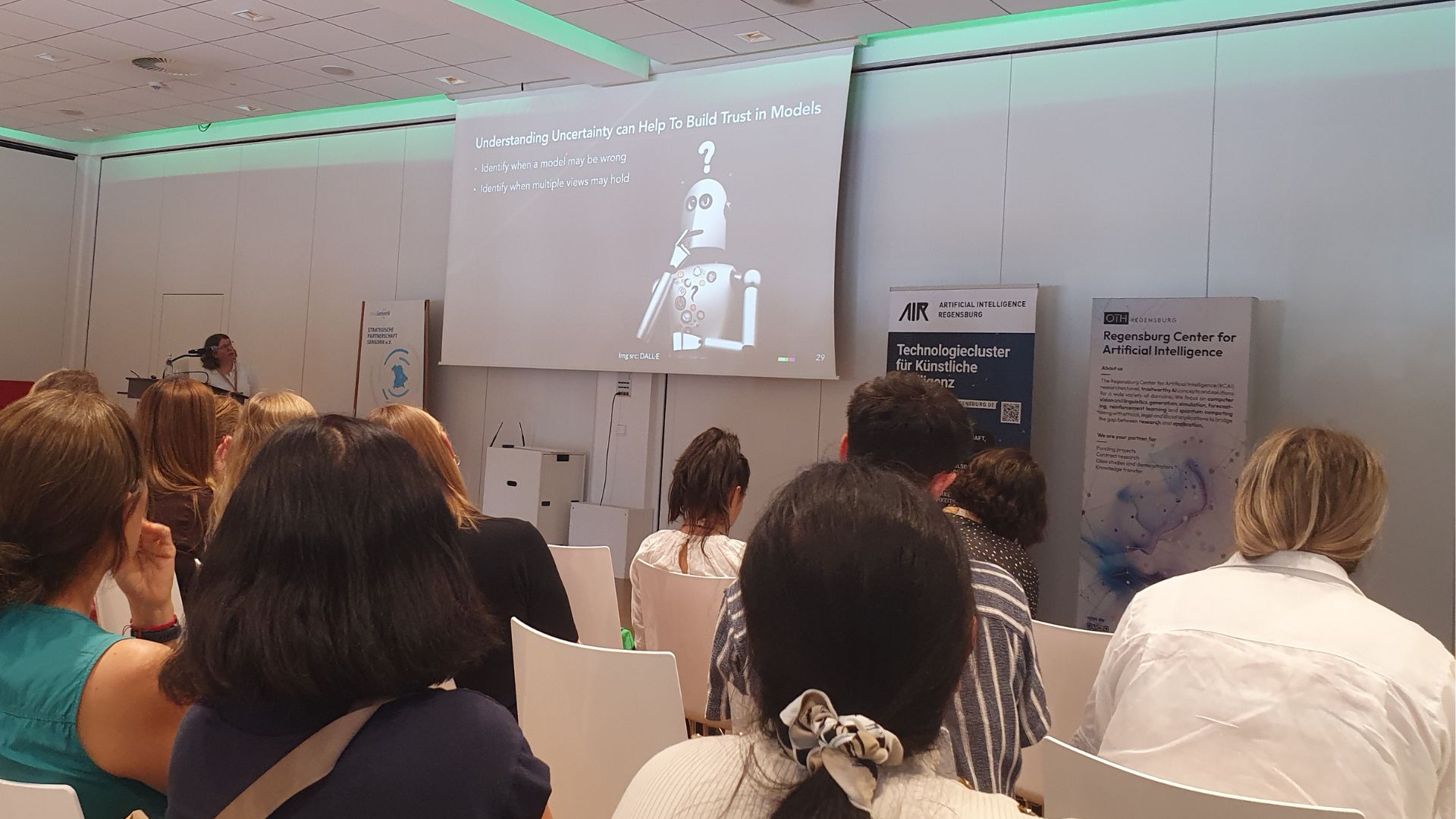
The afternoon was devoted to fundamental questions. In empirical studies, human-AI teams often perform worse than humans or AI alone—not despite, but because of the combination: overreliance on AI outputs and the mismatch between human cognitive processes and AI systems undermine the potential of collaboration. Explainable AI methods that align with human decision-making logic offer a solution. Large language models scale, but scaling alone does not create inclusive language technology: linguistic and human variation must be integrated as a design principle in development and evaluation, not treated as an afterthought. At Spotify, recommender and search systems for millions of users are evolving from static recommendations to interactive, intention-based discovery experiences—and the scalable evaluation of these systems is itself an unsolved research problem.
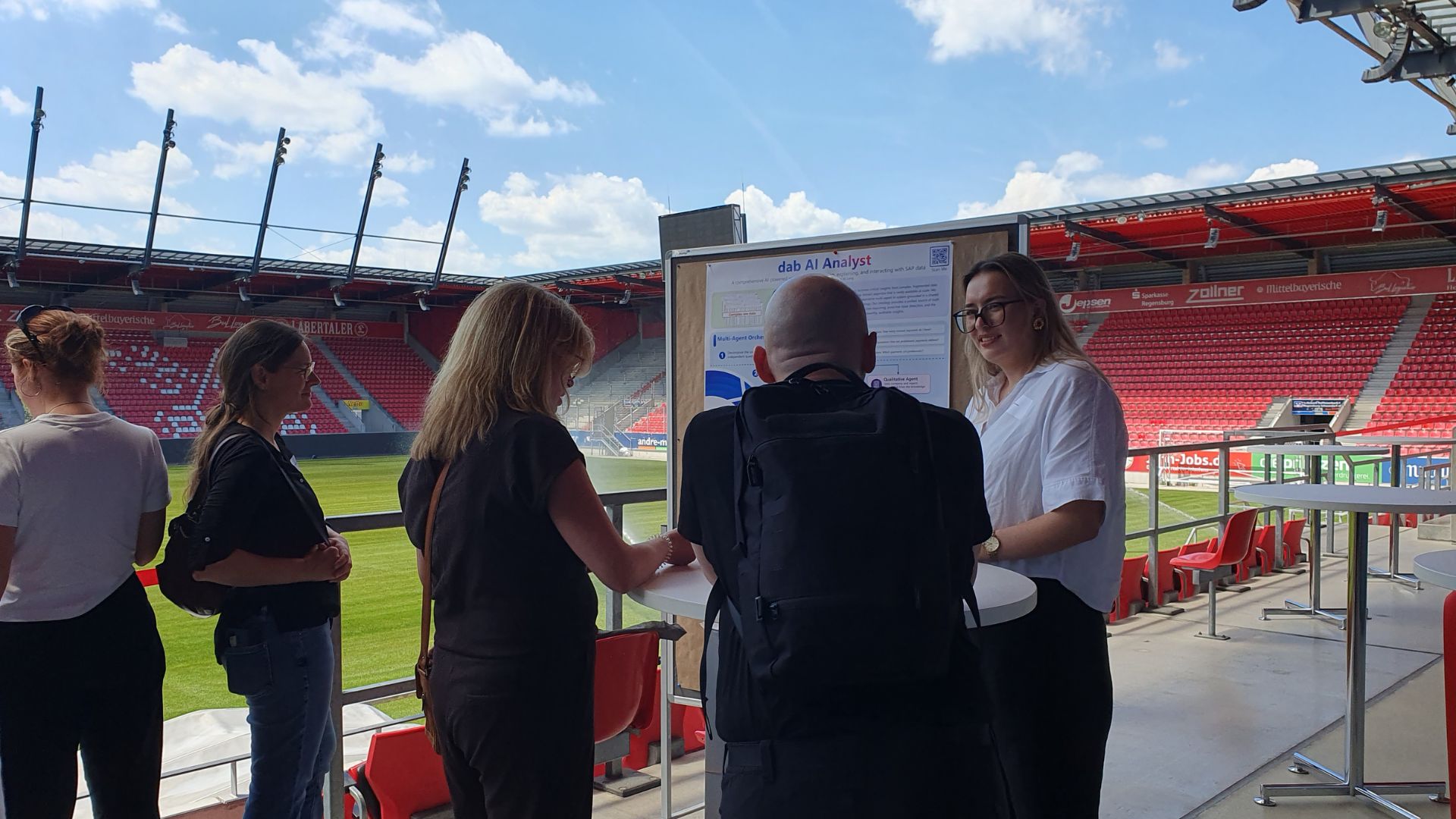
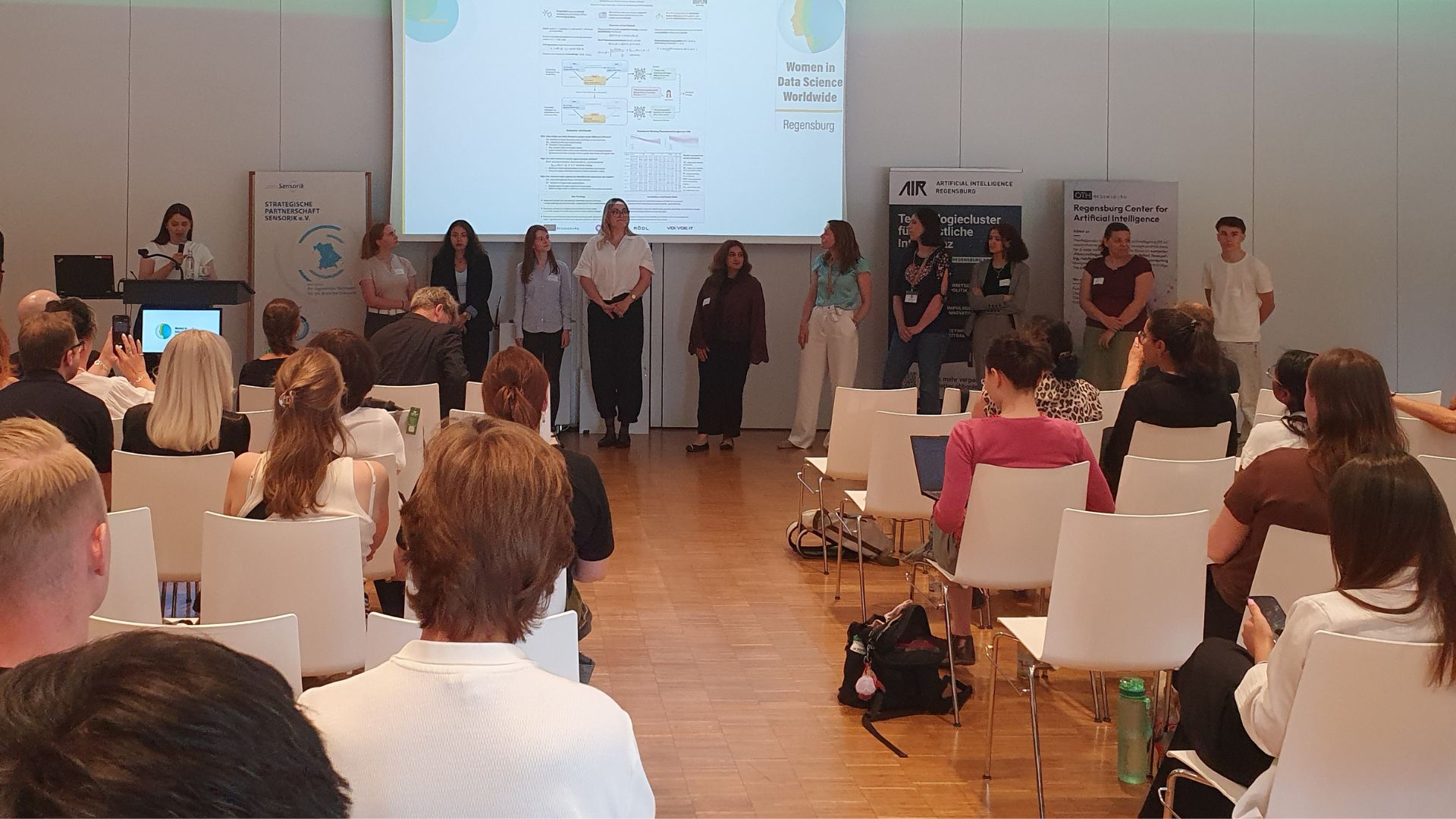
For the WiDS team, raising the profile of up-and-coming regional data scientists is just as important as the keynote speeches. The two go hand in hand: “If you want to advance research, you must also be allowed to showcase it. The poster session at our conference gives young researchers and students exactly that opportunity—and that’s often where the most interesting conversations of the day take place,” agree Prof. Dr.-Ing. Maike Stern (OTH Regensburg) and Dr. Elisabeth Moser (Krones AG), the main organizers of WiDS Regensburg.
For more details on the presentations, see https://www.wids-regensburg.de/agenda-2026/.